Insights
5 Strategic Planning Best Practices for Public Utilities
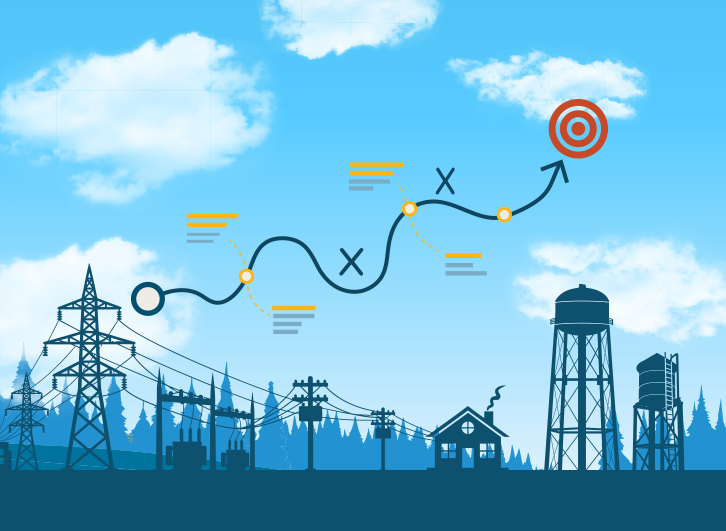
Public utilities are operating in an increasingly complex environment. Aging infrastructure, extreme weather impacts, evolving policy mandates, rising service demands, affordability pressures, and growing expectations for transparency are reshaping how utilities plan for the future.
In this context, strategic planning is more than a formality. It is a practical tool that helps utilities clarify direction, align governance and operations, and prioritize investments in a smart and defensible way.
The most effective strategic plans share common characteristics. In our work with utilities and other entities over the past two decades, we have found that the five practices below consistently contribute to stronger outcomes and long-term success.
1. Engage Commissioners, Management, and Staff in a Collaborative Process
Strategic plans that are collaboratively developed tend to be more successful. We have observed organizations undertake strategic planning with only a subset of leadership, which can miss key opportunities to capture insights from other interested parties, both internal and within the community.
Since staff are primarily responsible for implementing the plan, their input and buy-in throughout the process is crucial to its long-term effectiveness. Organizations that get the most value from planning create the conditions for meaningful internal engagement to facilitate a collaborative process with staff. This means setting shared expectations for how their input will be used and what decisions are on the table. Successful strategic planning processes also provide background information that serves as a shared set of facts. Finally, communicating early about how the plan will connect with budgets, work plans, and performance measures will demonstrate to internal participants how their input will connect with future actions.
2. Conduct Assessment Interviews at the Outset of the Process
Effective strategic planning begins with a clear understanding of current conditions.
Assessment interviews conducted by a neutral third party allow commissioners, executives, managers, and interested parties to anonymously share their perspectives about how the utility is doing, what challenges and threats it faces, and what strengths and opportunities exist. This format often daylights connections, important nuances and opportunities that might otherwise be missed while bringing these key parties into the process early.
The insights gathered can be summarized in an anonymous key themes document that contributes to rich discussions about future direction.
3. Seek Input from Customers and Interested Parties
Strategic planning processes that involve thoughtful engagement of customers and interested parties are more effective.
Utilities serve communities and operate in the public trust. Community engagement provides an opportunity to hear directly from customers and interested parties about their concerns, expectations, and priorities. It also strengthens transparency and credibility.
Meaningful engagement may include interviews, surveys, facilitated discussions, or public workshops. The goal is not simply to gather comments, but to identify themes that meaningfully inform strategic direction.
When these perspectives are incorporated thoughtfully, the resulting plan is more useful and more durable.
4. Ensure Alignment Between the Strategic Plan and Other Utility Planning Efforts
Strategic plans are the foundation for all other utility planning processes, including long-term resource plans. A solid strategic plan creates coherence across an organization.
A well-developed strategic plan typically includes:
 | Vision: A clear statement of where the utility aspires to be in the long term. It describes the future state the organization is working toward. |
 | Mission: A definition of the utility’s core purpose. It explains why the organization exists and who it serves. |
 | Values: The guiding principles that shape decision-making and organizational culture. Values define how the utility conducts its work and interacts with customers, employees, and partners. |
 | Goals: Specific, outcome-focused priorities the utility intends to achieve within the strategic planning horizon. Goals translate vision into measurable direction. |
 | Strategies: The high-level approaches the utility will pursue to achieve each goal. Strategies describe the direction the organization will take and the methods it will prioritize. |
 | Tactics/Actions: The specific activities required to implement each strategy. These are the concrete steps, initiatives, or projects that move the work forward. |
These elements establish a clear compass direction. Long-term resource planning, capital improvement planning, financial forecasting, and workforce planning are guided by alignment with the strategic plan.
When strategic and operational plans are aligned, decision-making is clearer and investments are easier to justify. When they are not, priorities compete and organizational focus drifts.
5. Create a Living Strategic Plan with Clear Metrics
The most effective strategic plans incorporate annual review processes in which progress toward goals is assessed.
Clear metrics tied to each goal allow leadership and staff to evaluate performance and determine whether strategies are producing the intended results. Utilities can then make needed adjustments, including revising action steps, to ensure they are on track.
When treated as a living framework, a strategic plan becomes an active management tool rather than a static policy document.
Ready to Start the Conversation?
If your utility is preparing to initiate or update its Strategic Plan, our team can help design and facilitate a collaborative, defensible process tailored to your organization.
Complete the form below to connect with our team and discuss your utility’s strategic planning priorities.
Contact
Questions About Strategic Planning for Your Utility?
Complete the form and Hilary will be in touch.

Share this article on social media/email
Author